How to Recycle RAM
How do you recycle RAM from retired business computers?
To recycle random access memory (RAM), identify your surplus modules, document the quantity and condition, and contact us before packing or shipping. Interco purchases computer components and electronic scrap, helping businesses move retired hardware into an organized recovery process through our electronics scrap recycling services.
Start with a simple inventory. Tell us whether you have loose memory sticks, memory still installed in equipment, or a mixed shipment of computer parts. Include photographs and an estimated weight when available.
Learning how to recycle RAM also means deciding what should happen before collection. Confirm that your organization has approved the equipment for release. Keep potentially reusable modules separate from damaged material, and ask us to review your shipment details before you commit labor to sorting or dismantling.
Why does recycling RAM matter for your company?
Recycling RAM supports material recovery and gives your company a planned route for retiring unwanted electronic components. The United States Environmental Protection Agency explains that Recycling includes sorting, dismantling, mechanically separating, and recovering valuable materials. Its electronics stewardship guidance describes how recovered materials can return to manufacturing.
The wider collection gap is substantial. Worldwide, 62 million metric tonnes of electronic waste were generated in 2022, but only 22.3% by mass was documented as formally collected and recycled, according to the Global E-waste Monitor 2024. These figures cover electronic waste overall, not RAM alone.
For your business, the practical starting point is modest: stop adding retired memory to forgotten storage boxes. Assign responsibility, record what is available, and arrange a review of the material.
What information should you gather before recycling RAM?
Gather the information that identifies your modules and explains the size of the proposed shipment. You do not need to identify every chip before contacting us, but clear descriptions help establish what needs review. Use these inventory categories in alphabetical order:
- Condition: Separate tested working modules, untested memory, and visibly damaged pieces in your records.
- Identification: Record readable manufacturer names, part numbers, capacity markings, and memory generation labels.
- Quantity: Estimate the number of modules, total weight, and number of containers.
- Source: Note whether the material came from office upgrades, server replacements, repairs, or accumulated surplus.
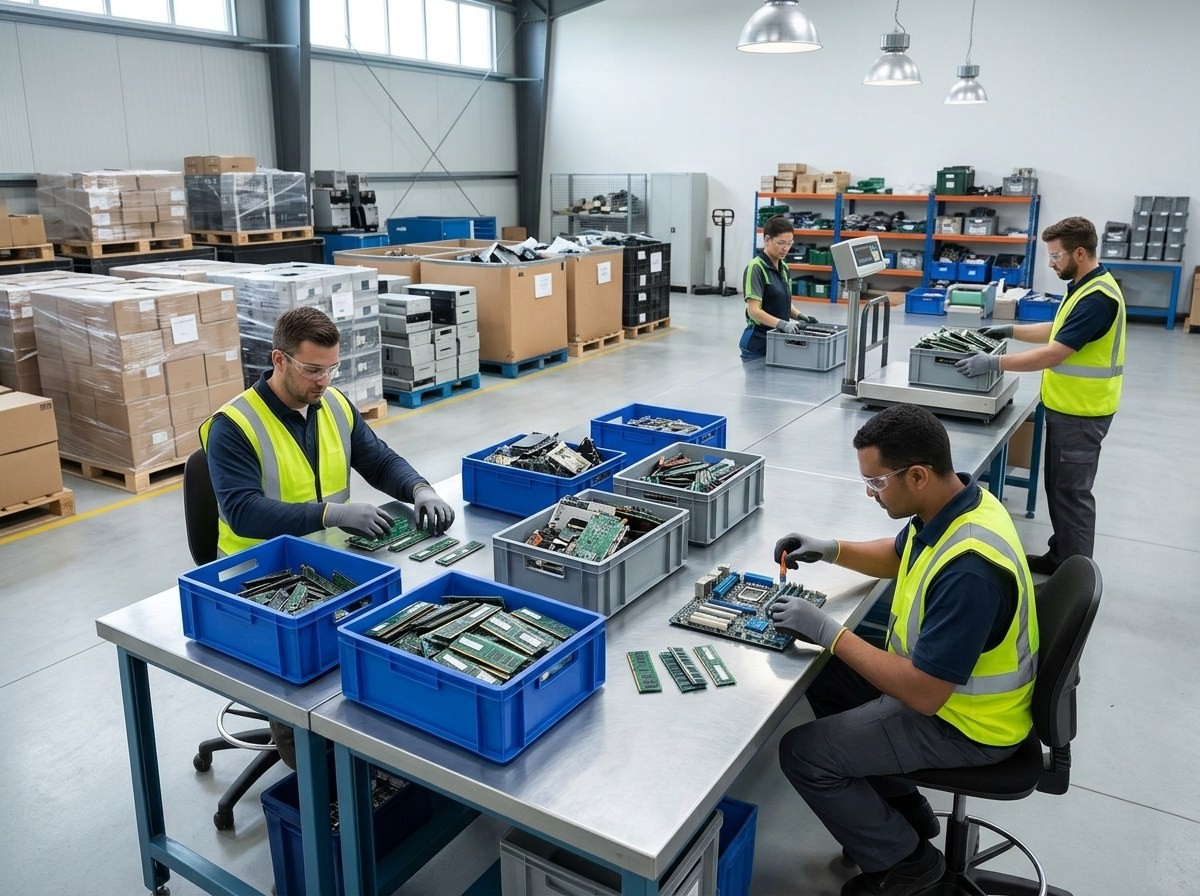
Share representative photographs rather than guessing at unfamiliar labels. When preparing to recycle scrap RAM, describe other components in the load separately so we can review the complete shipment.
How should you prepare scrap RAM for shipment?
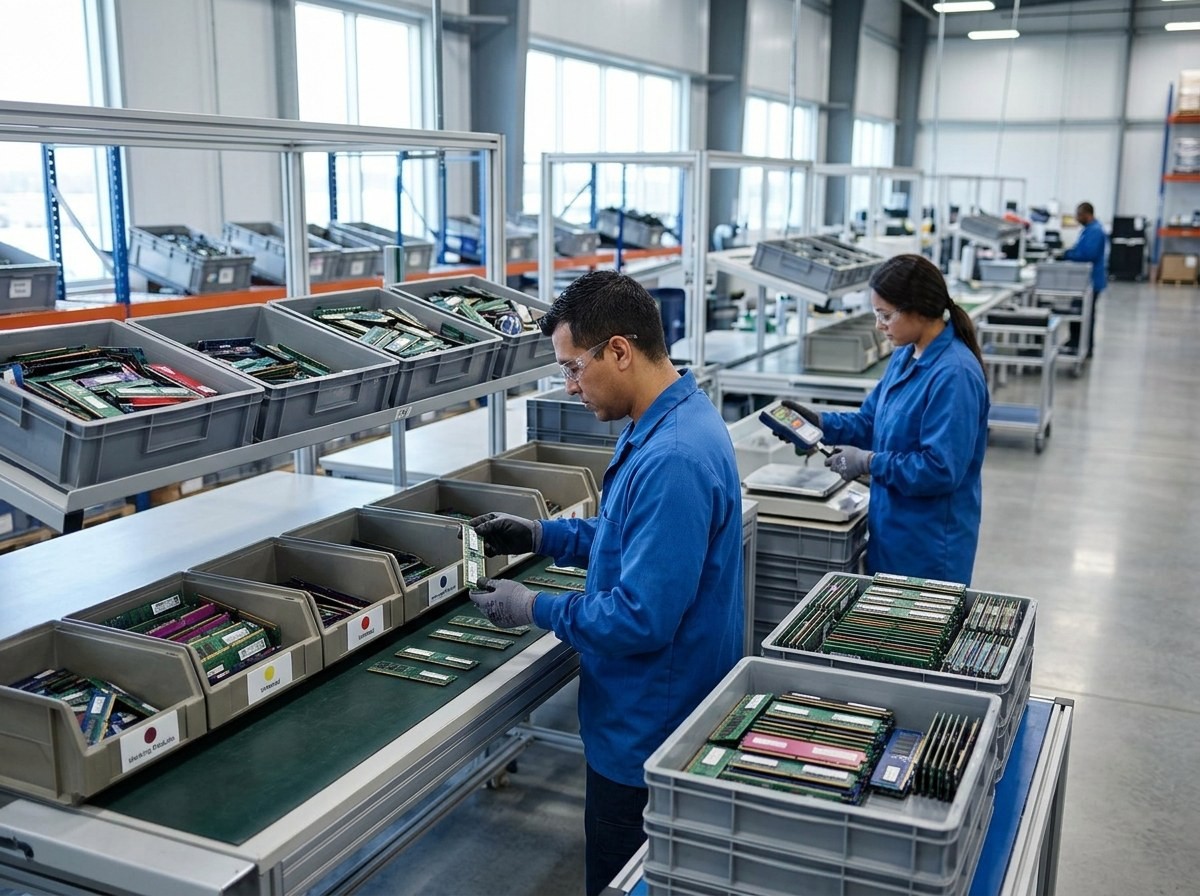
Prepare scrap RAM by confirming the handling requirements first, then organizing the material into clearly identified containers. Ask us what preparation is appropriate for your shipment before removing parts from complete equipment. Our electronics operation uses controlled dismantling and separate material workflows, as described in our electronics processing overview.
- Confirm which equipment and components your organization has authorized for recycling.
- Have qualified personnel follow the equipment manufacturer's instructions if memory removal is necessary.
- Keep identified memory groups together and mark containers to match your inventory.
- Record container counts and estimated weights, then confirm packaging and transport arrangements with us.
Tell us about loose parts, broken modules, or other electronics before loading. Do not assume that packaging suitable for loose memory is also suitable for every item in a mixed shipment.
What does Interco's R2 certification mean for your RAM recycling project?
Interco is a Responsible Recycling (R2) certified company, approved for Appendix B, which addresses data sanitization. Data sanitization means making stored information inaccessible through an appropriate, verified process. This matters when your RAM shipment also includes computers, drives, or other equipment that may contain business information.
The standard's administrator explains in its Appendix B guidance that these requirements include enhanced security and device tracking beyond the basic data security requirements. Certification scope determines which sanitization activities a facility performs.
Before releasing equipment, tell us about your organization's data handling requirements and identify any storage devices included with the memory. Ask us to confirm the applicable processing method and available documentation for your shipment. Do not assume that every component requires the same treatment.
Should you consider reuse before you recycle scrap RAM?
You should consider reuse when memory remains functional, identifiable, and suitable for another application. Recycling is appropriate when equipment no longer has a practical reuse route. The Environmental Protection Agency's guidance on reuse and refurbishment explains that extending product life can reduce demand for raw materials.
Ask us about technology asset remarketing and equipment evaluation when your retirement project includes potentially usable hardware. Age, condition, configuration, and market demand all belong in that discussion. An untested module should not be described as working simply because it looks intact.
Keep your internal release requirements in view throughout the decision. Separate the question of possible reuse from approval to release equipment. Share any restrictions with us before shipment, especially when memory arrives alongside complete computers or storage devices.
How can your business request a RAM recycling quote?
Your business can request a RAM recycling quote by sending us a description of the material, photographs, estimated quantity, condition, and shipping location. Include whether this is a single cleanout or a recurring source of surplus memory. Also identify any complete computers or other components that would travel with it.
When evaluating RAM recyclers, clear transaction details matter more than an unsupported price promise. Ask us to confirm the proposed material classification, preparation requirements, freight responsibilities, and settlement terms. Do not assume that every module or mixed load will receive the same valuation.
Use your inventory to request a quote for your scrap RAM shipment. We can review the proposed load and discuss the next steps. Whether you are planning an equipment refresh or clearing accumulated parts, start the conversation before packing.
Can Interco arrange RAM shipments across the contiguous United States?
Yes, Interco can arrange shipping anywhere in the contiguous United States, supported by a great logistics team that coordinates material movements and shipment paperwork. Our freight coordination and logistics services include domestic truckload and less-than-truckload transportation, allowing shipment planning to reflect the amount of material involved.
Before requesting transport arrangements, gather these site details:
- The collection address, operating hours, and preferred shipping window.
- The number of containers or pallets and their estimated dimensions and weights.
- Whether a loading dock or forklift is available.
- Any access restrictions or appointment requirements at your facility.
Discuss packaging, loading responsibilities, freight arrangements, and costs before dispatch. Recycling RAM should fit an agreed transport plan rather than depend on assumptions about what a driver can load or how a shipment will be received.
How does Interco's proprietary ERP support recycling RAM?
Interco's proprietary enterprise resource planning (ERP) platform records shipment information across receiving, processing, and settlement. It captures inbound weights, material classifications, processing stages, compliance checkpoints, and financial settlements. This shipment-level tracking supports the documentation described in our electronics recycling tracking and reporting overview.
For a company retiring memory, useful records begin before material leaves the building. Give each container a clear reference and use the same descriptions in your inventory and shipping paperwork. Tell us when quantities are estimates rather than verified counts or weights.
Before dispatch, explain which records your purchasing, accounting, or environmental team needs. Ask us to confirm the documentation available for your specific transaction. Consistent descriptions make it easier to discuss differences between your original estimate and the material received without relying on memory or informal notes.