Stainless Steel Recycling
What do Interco's stainless steel recycling services offer your business?
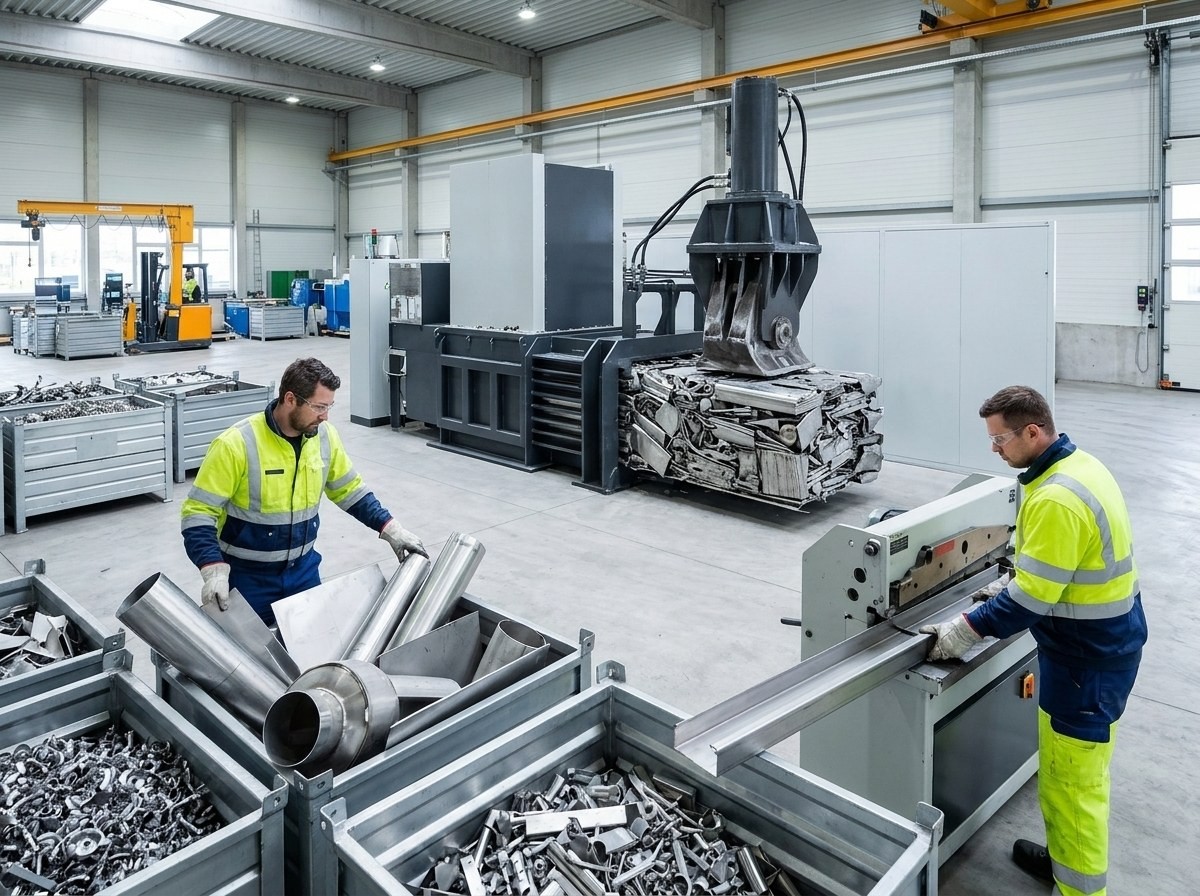
Interco's stainless steel recycling services help businesses move scrap metal into an organized recovery process. Interco serves commercial and industrial organizations with metal recycling and material purchasing capabilities, including stainless steel, as described in our industrial recycling capabilities overview.
Start by telling us what your business generates, where the material is located, and whether you need help with a single shipment or an ongoing scrap stream. Include photographs and available material records so we can discuss the load before transportation is arranged.
You do not need to arrive with every technical answer. Describe the material as accurately as possible, identify anything you cannot confirm, and request a quote. Our goal is to make the next steps understandable, from the initial conversation through shipment planning.
Why is recycling stainless steel worth planning carefully?
Recycling stainless steel keeps useful metal available for new production rather than treating it as discarded material. Team Stainless states, Recycling is highly beneficial, economically and environmentally. Its global stainless steel life cycle report explains the value of recovering metals already in circulation.
Using 2019 data covering 50 countries, territories, and regions, the report estimates a global end-of-life stainless steel recycling rate of approximately 95%. This includes about 70% returned to stainless steel production and 25% used in carbon or special steel production. See the 2019 recycling rate and recovery destinations.
These figures describe the wider industry, not a guaranteed result for an individual shipment. For your business, begin with a clear inventory and a practical plan for the material you actually have.
What stainless steel scrap should you tell us about?
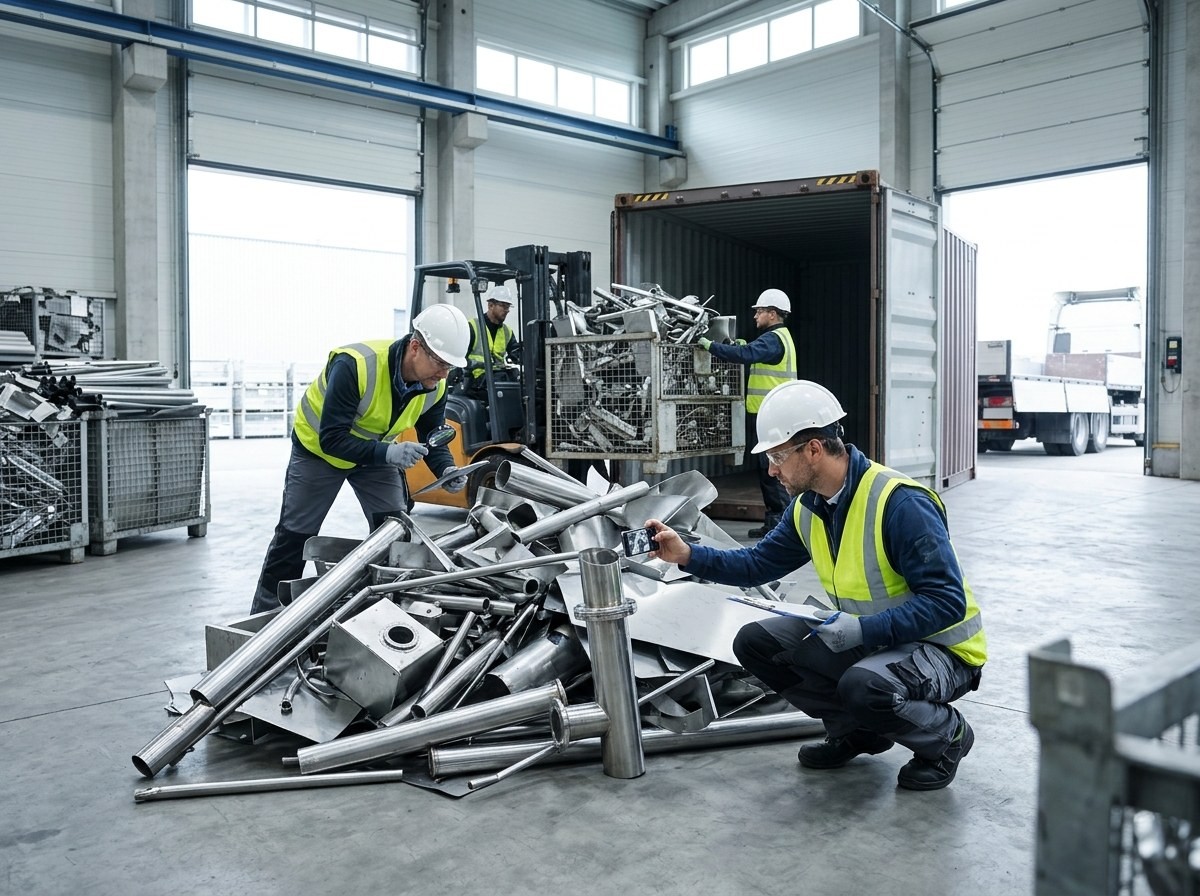
Tell us about both manufacturing leftovers and stainless steel products removed from service. The New Zealand Stainless Steel Development Association distinguishes production scrap from reclaimed equipment, tanks, appliances, and building materials in its stainless steel scrap collection guidance.
Use these categories to organize your inquiry, and ask us to confirm suitability before arranging a shipment:
- Production offcuts: Describe sheet pieces, fabrication leftovers, and any available grade markings.
- Retired equipment: Provide photographs, dimensions, and a description of the equipment's former use.
- Separated components: Identify stainless pieces removed from a larger assembly and note remaining attachments.
- Mixed material: Explain which other metals or nonmetal parts are present in the load.
Include uncertainty rather than guessing. If the grade or composition is unknown, say so clearly and share any supporting purchase or manufacturing records.
How do you prepare to recycle scrap stainless steel?
To learn how to recycle scrap stainless steel, begin by documenting your material and confirming shipment requirements with us. Use a simple preparation sequence before committing labor, containers, or transportation.
- Inventory the scrap. Record its location, approximate quantity, physical form, and available identification.
- Photograph the load. Show the overall material, close views, attachments, and any readable labels.
- Describe its condition. Tell us about coatings, residue, mixed metals, or uncertainty about prior use.
- Confirm the plan. Discuss acceptance, packaging, loading access, and transportation before dispatch.
Ask before cutting apart equipment or combining separate scrap streams. Describe anything that needs special review rather than assuming it belongs in the shipment.
For recurring production scrap, nominate one person to maintain the inventory and communicate changes. Include that person's role and your preferred collection schedule in the inquiry.
What if your project includes motors or transformers too?
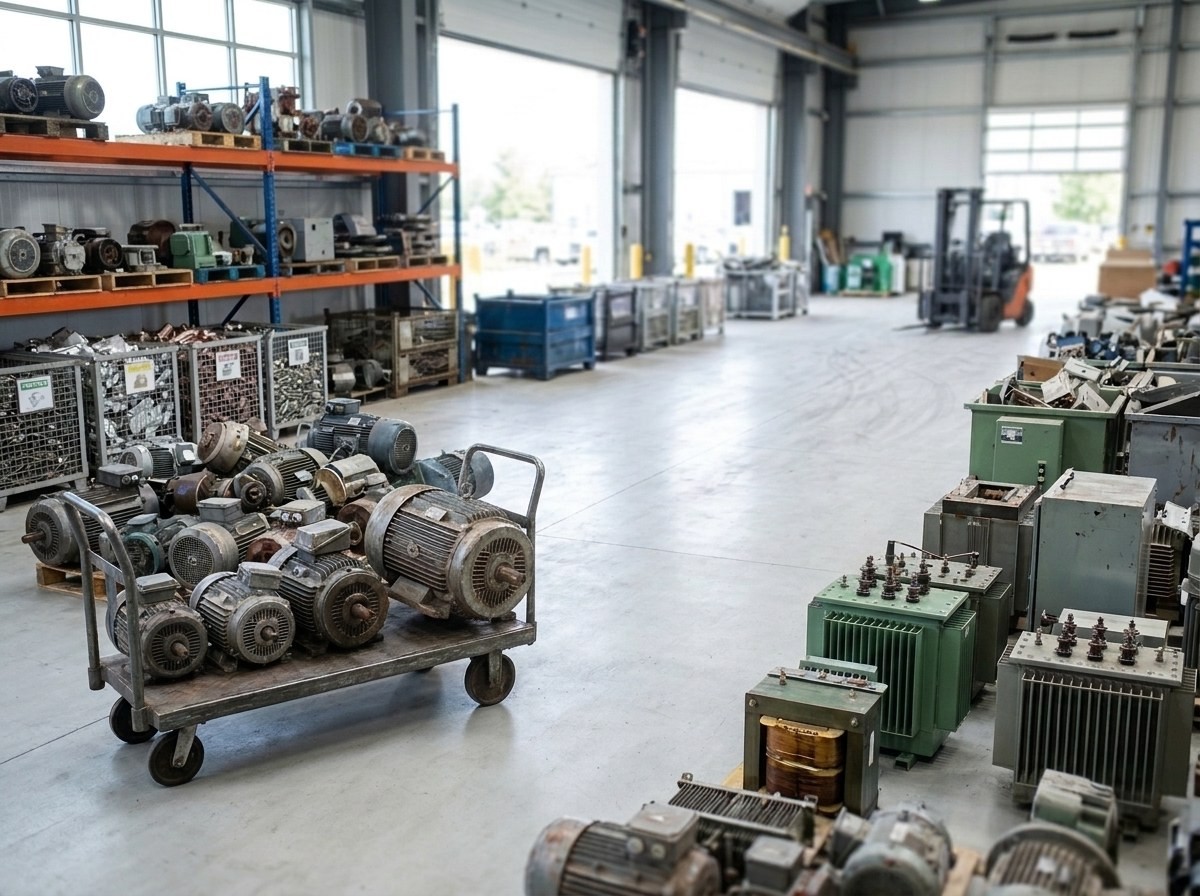
Tell us about motors or transformers separately from the stainless steel in your project. A complete inquiry should identify each material stream rather than describe every component as stainless scrap.
If your equipment removal includes powered assemblies, include their details when discussing scrap electric motor recycling. Likewise, identify electrical equipment separately when asking about company transformer recycling arrangements. Do not assume these items share the same preparation requirements.
Organize your project notes around three practical checks:
- Assemblies: List complete machines and identify attached components that remain in place.
- Background: Describe prior use and provide available equipment or material records.
- Condition: Photograph the items and explain anything unusual before requesting shipment approval.
Ask us to review the proposed materials together, while keeping each category clearly identified in your inventory.
Where can you recycle stainless steel and request a quote?
If you are deciding where to recycle stainless steel, start by requesting a quote from us with the details of your material. Include photographs, estimated weight, location, known grade, and whether the scrap is separated or mixed with other items.
Tell us whether you need stainless steel recycling services for regular production leftovers, retired equipment, or a facility cleanout. Share your preferred timing and explain any loading restrictions. If you have several locations, list them separately so the conversation reflects each site's needs.
Ask us to clarify material acceptance, preparation, transportation, documentation, and commercial terms before you proceed. Identify any information that is still an estimate.
Send your material description and request a quote today. We can discuss the next steps for recycling stainless steel around your business's actual scrap stream.
Can Interco arrange shipping throughout the contiguous United States?
Yes, Interco is able to ship anywhere in the contiguous United States, with arrangements coordinated around the material and shipment requirements. Our strong logistics team supports freight coordination and shipment documentation, including packing lists, scale tickets, and loading records.
Give us the shipping location, estimated weight, material dimensions, and available loading equipment when discussing transportation. Explain whether your site has restricted access, limited operating hours, or an appointment process. Ask which transport arrangement fits the proposed load before reserving equipment.
For an ongoing program, share your expected collection frequency and any seasonal changes. For a one-time project, identify the date by which the material needs to leave.
We will discuss the practical requirements with you. Do not dispatch material until the shipment details and receiving arrangements have been confirmed.
How does Interco's proprietary ERP support your recycling records?
Interco's proprietary enterprise resource planning (ERP) platform records material movements, weights, classifications, and transactions. Built for metals and electronics recycling, it supports tracking from receipt to shipment and documentation through final settlement within our metal recycling operations.
For a business managing repeated loads, clear records matter as much as an organized collection area. When discussing your program, explain how your team identifies shipments and what information your purchasing, accounting, or operations staff needs to reconcile them.
Ask about documentation requirements before the first load moves. Tell us whether you use purchase order references, internal material descriptions, or separate identifiers for different facilities. We can discuss those needs alongside the recycling arrangement.
Keep your own shipment descriptions consistent, and flag changes in material condition or composition when requesting the next quote.