Server Recycling
How does server recycling help your company retire old equipment?
Server recycling gives your company a planned way to move retired hardware out of storage and into material recovery. Interco helps businesses address scrap servers as part of their electronics recycling needs, with attention to equipment details, shipment planning, and processing requirements.
Getting rid of old servers should start with a clear inventory, not an unplanned cleanout. Identify what your company owns, which systems are no longer needed, and who can approve their release. Keep equipment scheduled for retirement separate from active hardware.
Whether you are replacing a server room or clearing accumulated equipment, tell us what you have before arranging transportation. A description of the load helps us discuss the next steps and prepare a quote suited to your project.
Why is recycling old servers worth planning carefully?
Recycling old servers deserves careful planning because retired electronics contain recoverable materials and may also hold sensitive information. A useful retirement plan addresses both concerns rather than treating equipment removal as the only goal.
The International Telecommunication Union reports that the world generated 62 million metric tonnes of electronic waste in 2022, with only 22.3 percent documented as properly collected and recycled. These figures cover all electronic waste worldwide, not servers alone, according to its Global E-waste Monitor 2024 findings.
For your company, the practical step is to establish a retirement process before unused equipment accumulates. Assign responsibility, record the hardware involved, and decide how stored information will be handled. Then request a recycling quote with those requirements clearly identified from the beginning.
What equipment should you identify before requesting server recycling?
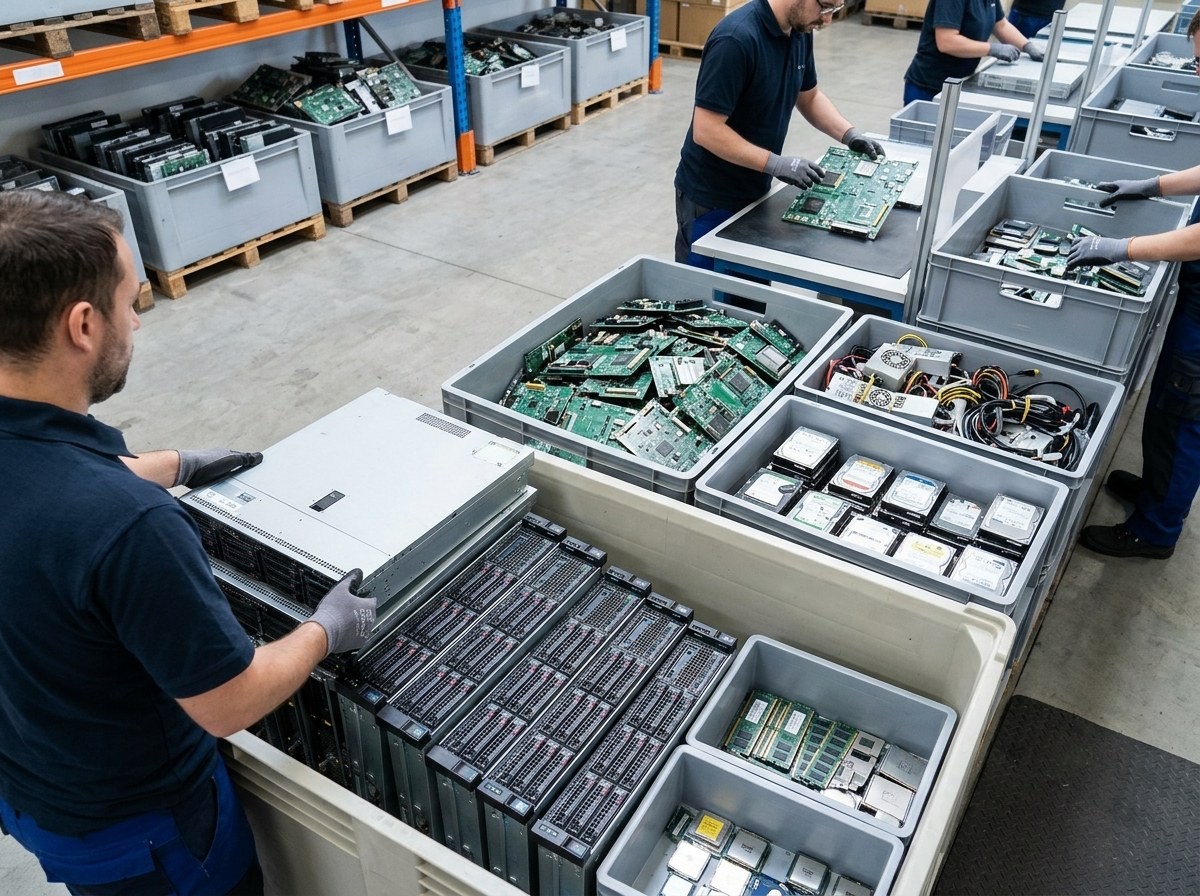
You should identify complete servers, loose components, and related electronics before requesting server recycling. Describe the actual contents of your shipment so we can review the material rather than relying on a broad label such as computer scrap.
Our electronics scrap recycling capabilities cover whole units and components. For a server retirement project, organize your inventory around these useful categories:
- Complete equipment: record server quantities, manufacturers, models, and whether major parts remain installed.
- Loose components: identify memory modules, processors, circuit boards, power supplies, and cables separately.
- Storage devices: note installed or removed drives and flag equipment that may contain company information.
Include photographs when labels or equipment types are unclear. Also tell us about missing parts, visible damage, and any batteries included with the proposed load.
How should your company handle data before getting rid of old servers?
Your company should establish and approve its data-handling requirements before releasing retired servers. Equipment recycling and information protection are related tasks, but a recycling shipment does not replace your internal security review.
The United States Environmental Protection Agency advises, Delete all personal information from your electronics. Its electronics donation and recycling guidance makes data preparation an explicit step before recycling.
- Identify every storage device included in the retirement project, including drives removed from servers.
- Have your authorized technology and security staff determine the required treatment and approve equipment release.
- Discuss handling and documentation requirements with us before confirming the shipment.
Tell us if your organization requires particular records or approvals. Confirm the agreed scope in advance rather than assuming that an unspecified service or document is included.
What does Interco's R2 certification mean for your retired servers?
Interco is a Responsible Recycling (R2) certified company, approved for Appendix B, with certification covering our electronics recycling operations in Edwardsville, Illinois. This matters when your server retirement project includes storage devices that require controlled handling.
Appendix B addresses data sanitization, meaning processes that make stored information inaccessible. Sustainable Electronics Recycling International explains that these requirements include enhanced security and device tracking in its guidance on Appendix B and data security.
Before shipping, tell us which devices contain data and what your organization requires. Confirm the applicable treatment, documentation, and responsibilities during quote review. Certification does not replace a project-specific agreement or your internal approval process. Clear requirements help connect your information protection needs with the agreed server recycling scope.
What affects the potential value of scrap servers?
The potential value of scrap servers depends on their contents, configuration, condition, and the applicable market. Complete equipment and stripped chassis should not be described as identical material when requesting a quote.
Our explanation of information technology asset valuation and remarketing discusses factors such as age, model, memory, condition, and market value. Those details help explain why an equipment list is more useful than a general estimate of how much storage space the servers occupy.
Provide quantities and identify missing drives, processors, memory, or power supplies. If your inventory includes different generations of hardware, separate them in your description.
Request a project-specific quote rather than assuming every load produces the same return. Review the proposed material description, transportation arrangements, and commercial terms together before accepting the scope.
How can you request a quote for recycling old servers?
You can request a server recycling quote by sending us an equipment summary, location details, and your project requirements. Start with the information you have, and identify estimates clearly so we can discuss anything that needs confirmation.
Organize your request around three practical areas:
- Assets: include server quantities, models, photographs, condition, loose components, and whether storage devices remain installed.
- Business requirements: describe approval deadlines, data-handling expectations, and the documentation your organization needs.
- Collection details: provide the pickup location, estimated shipment size, loading access, and preferred timing.
Use our recycling inquiry form to request a quote and explain whether this is a one-time cleanout or a recurring retirement need. We can then discuss the material and logistics without relying on assumptions about your equipment or site.
Can Interco's logistics team arrange shipping across the contiguous United States?
Yes, Interco's logistics team can arrange shipping anywhere in the contiguous United States for your server recycling project. We coordinate transportation details with the material, loading conditions, and receiving arrangements in mind.
A great logistics team does more than schedule a truck. Our freight coordination and shipping services include organizing loads and associated shipment paperwork. Clear information from your site helps make those arrangements practical.
Before scheduling, tell us the pickup location, pallet count, estimated weight, and available loading equipment. Explain whether your site has a loading dock, restricted access, appointment requirements, or limited receiving hours.
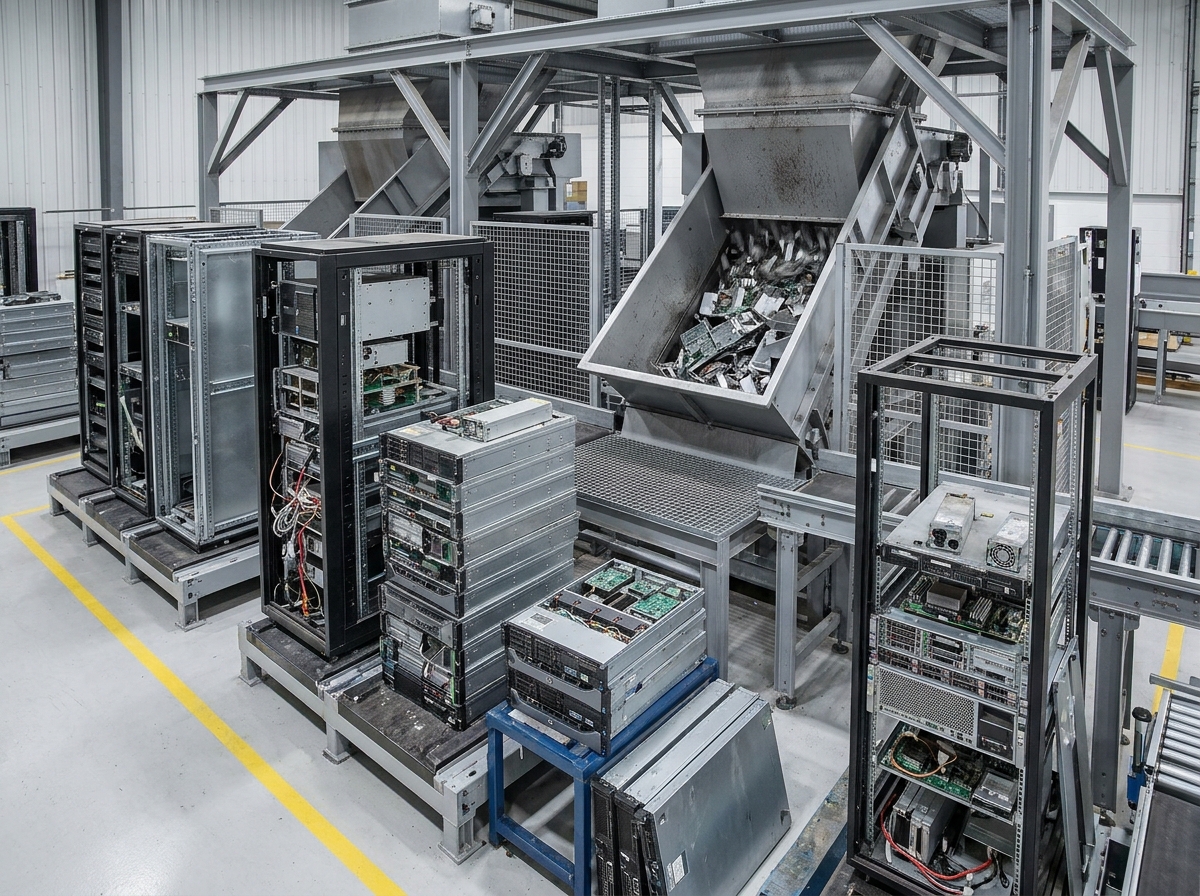
Do not assume that loose servers, loaded racks, and palletized components require the same arrangements. Confirm packaging and loading responsibilities with us before dispatch so your staff knows what to prepare.
How does Interco's proprietary ERP support recycling records?
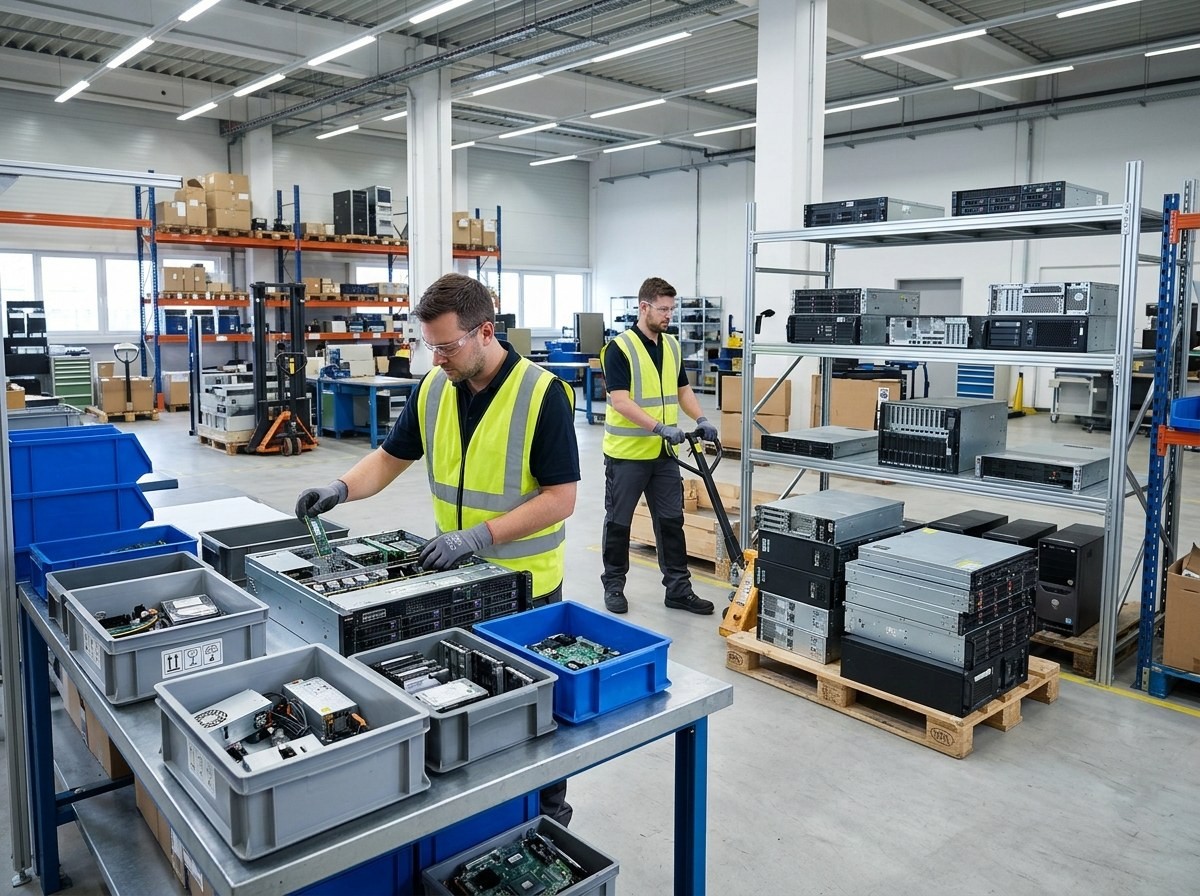
Interco's proprietary enterprise resource planning (ERP) platform records shipment information across the recycling workflow. It captures inbound weights, material classifications, processing stages, compliance checkpoints, and financial settlement information in real time.
These records connect the physical material with the business details needed to manage it. Our electronics processing and shipment tracking workflow combines controlled material handling with operational records rather than treating each shipment as an isolated transaction.
For your server recycling project, explain which records your purchasing, accounting, or environmental team needs before work begins. Ask us to confirm the documentation available for the agreed scope.
The ERP supports our operations, but it should not be confused with a promise of individual serial-number tracking or customer portal access. Discuss any equipment-level reporting requirements specifically during your quote review.